
Broad Money Supply (Money Printing) Surges by Rs. 2.1 Trillion
2026-05-24 1513
Currency in Circulation Increased by Rs. 303,956 Million Within 17 Months
Central Bank Imposes an Unofficial “Capped Price” on the US Dollar Despite IMF Commitments
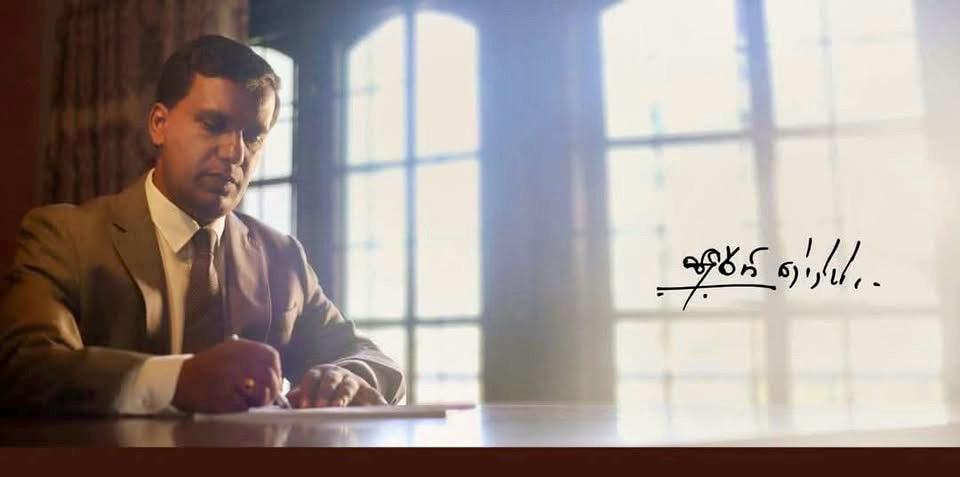
Rajith Keerthi Tennakoon
The Central Bank of Sri Lanka has continued expanding broad money supply while purchasing US dollars from commercial banks. However, the government has failed to meaningfully increase foreign reserves or reduce the country’s debt burden, exposing a deepening economic crisis, according to Mr. Rajith Keerthi Tennakoon.
In a media statement issued in his capacity as Executive Director of the Sri Lanka Human Rights Center, Mr. Tennakoon stated that Sri Lanka’s broad money supply (M2b), which stood at Rs. 14,439.1 billion in January 2025, had expanded to Rs. 16,585.7 billion by March 2026 — an increase of Rs. 2,146.1 billion (Rs. 2.1 trillion).
(Source: Central Bank of Sri Lanka Weekly Economic Indicators – May 22, 2026 and March 28, 2025)
During the past 15 months, the Central Bank has effectively created money through the expansion of broad money supply (M2b), which in technical terms amounts to monetary printing. The increases recorded in 2026 alone were: January – Rs. 94 billion, February – Rs. 207.3 billion, and March – Rs. 309.4 billion, totaling Rs. 610.7 billion.
The Central Bank is creating money in order to purchase foreign currency from commercial banks and artificially boost foreign reserves. Under the conditions imposed by the International Monetary Fund (IMF), direct money printing for day-to-day state expenditure is prohibited. However, the Central Bank appears to be using indirect mechanisms to circumvent those restrictions.
“The Central Bank gives rupees to commercial banks and buys dollars. It is impossible for the Central Bank to buy dollars without printing or creating money. What is happening here is money creation — money printing,” Mr. Rajith Keerthi Tennakoon stated.
Sri Lanka’s economic crisis continues to attract international attention. Economist Steve Hanke, who made controversial observations regarding inflation in Sri Lanka during the administration of Gotabaya Rajapaksa, recently posted on X:
“INFLATION STORY = MONEY SUPPLY STORY”
Journalist Ranga Sirilal also commented on X regarding money printing:
“Rupee Under Pressure With Central Bank Printing Money:
Rupee Depreciated 7.2% Against The US Dollar So Far This Year To 353.17 Rupees From Last Weeks 327.35 & Last Years 299.61.
@CBSL Printed 309.4 Billion Rupees in March Bringing First Three Months Printing To Rs.610.7 Billion.”
Newly Printed Currency Notes in Circulation
Currency notes bearing the signature of President Anura Kumara Dissanayake are now widely circulating in daily transactions.
As of January 1, 2025, currency in circulation amounted to Rs. 1,351,312 million. By May 22, 2026, this figure had risen to Rs. 1,655,268 million — an increase of Rs. 303,956 million. This expansion in physical currency circulation directly contributes to rising inflationary pressure.
Erosion of Public Confidence
On April 22, 2026, the Free Lawyers organization revealed details of what it described as a “Treasury robbery,” after which reports emerged regarding missing funds from several institutions, including the Department of Posts, Aswesuma welfare program, National Development Bank, People’s Bank, the Road Development Authority, and SriLankan Airlines.
Despite the abnormal increase in broad money supply, the imposition of an unofficial cap on interbank dollar exchange rates, and the sharp rise in currency notes in circulation, the Central Bank has yet to provide a transparent and comprehensive explanation.
The Sri Lankan Rupee continues to depreciate steadily. The Governor of the Central Bank has reportedly held two informal meetings with commercial bank executives and licensed money exchange operators, instructing them to maintain the dollar exchange rate within the Rs. 329–335 range.
The Central Bank of Sri Lanka is also accused of violating IMF guidelines by unofficially imposing a controlled exchange rate of Rs. 330 per US dollar for interbank transactions. Furthermore, the deadline granted to exporters and importers to repatriate foreign exchange earnings has reportedly been reduced from 90 days to 30 days.
A similar set of temporary measures was implemented in 2021 in an attempt to prevent the collapse of the rupee and control inflation. Those policies ultimately failed to stabilize the economy.
Interest Rate Hikes Appear Unavoidable
In the coming days, increases in bank interest rates are likely to become unavoidable. At the same time, fuel prices — and consequently the prices of almost all essential goods and services — are also expected to rise.
Foreign Reserves Remain Stagnant
Foreign reserves, which stood at US$ 6,531 million in March 2025, increased only marginally to US$ 6,759 million by the end of April 2026.
During 2023 and 2024, the Central Bank had succeeded in increasing reserves by approximately US$ 175 million per month. However, despite the Rs. 2.1 trillion expansion in broad money supply (M2b), reserves have now largely stagnated.
On May 27, 2026, the International Monetary Fund is expected to release US$ 700 million to support Sri Lanka’s budget financing. However, those funds are intended for Treasury operations and fiscal management — not for building up foreign reserves.
Rising Debt Burden
Sri Lanka’s outstanding central government debt, which stood at Rs. 28,240.22 billion in November 2024, had increased to Rs. 29,994.69 billion by the end of 2025 — a rise of Rs. 1,754.47 billion.
The abnormal increase in broad money supply, the unofficial capping of the dollar exchange rate outside accepted market mechanisms, the rapid rise in currency circulation, the continuous depreciation of the rupee, and the inability to build foreign reserves are all clear manifestations of the current economic crisis.
To resolve this crisis, the government must urgently seek the assistance of the country’s financial experts, intellectuals, economists, and professionals.
Rajith Keerthi Tennakoon
Executive Director
Sri Lanka Human Rights Center






Lanka Newsweek © 2026